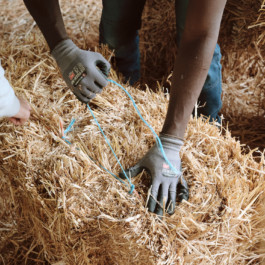
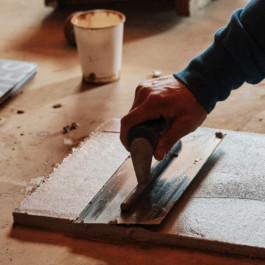
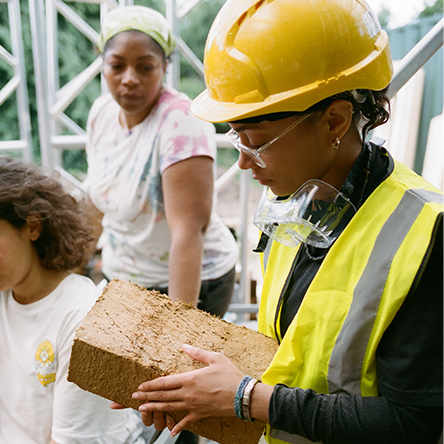
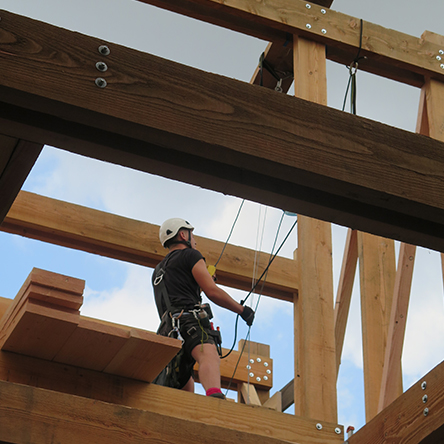
Agriculture and architecture, two of the most ecologically degrading human activities, have the potential to sequester carbon, restore natural habitats and stabilise the climate. The Land Lab will maintain experimental growing plots and manage woodland, developing practical knowledge of how agroecological land management can generate bio-based materials like timber, plant fibres, and earth – at a scale relevant to construction.


The Land Lab is conceived as a living laboratory, testing bioregional construction systems under real conditions, with real materials, at full scale. The structures on site will each be designed, built, lived and worked in by students and researchers. Each building will exist as a demonstration of the potential of an integrated approach to landscape and materials.


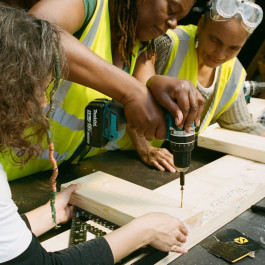
Programmes will be rooted in making and doing, developing knowledge through direct experience, observation and collaboration. Learning about land management practices will run alongside regenerative design and construction, with students encouraged to move between disciplines, encouraging collaborative and integrative thinking.


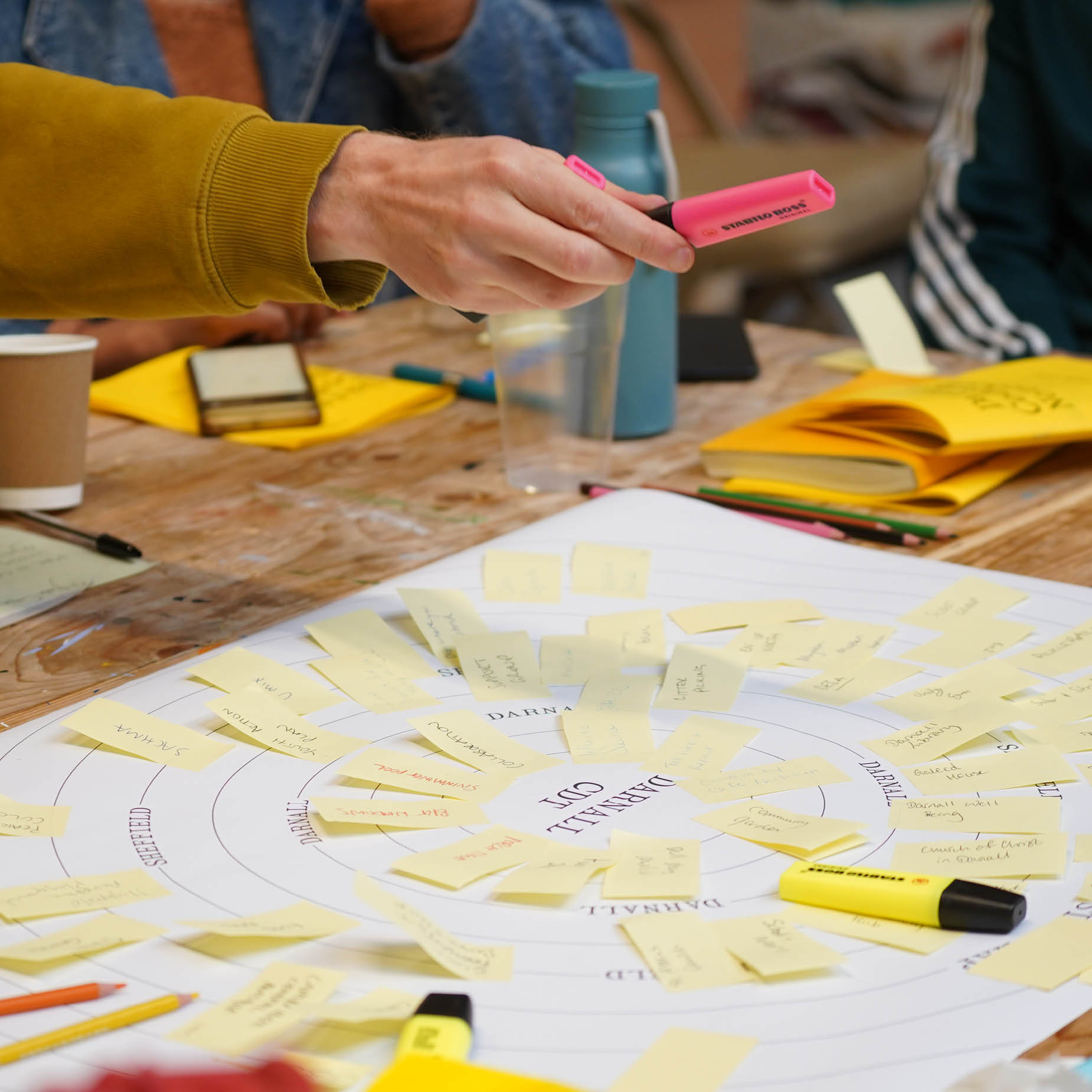
The Land Lab will be open to practitioners, communities, policymakers and researchers shaping the emerging practice of regenerative construction. It is conceived as a commons – a shared resource for a growing field of knowledge, and a place where the connections between ecology, construction and community can be explored together.


The Land Lab will incubate the skills, ideas and knowledge needed at the local and regional scales. Where industrialised construction tends towards standardisation and erases the particularities of place, the Lab is grounded in geographic and social specificity. Its testing infrastructure will support the development of regional materials and supply chains, informing a wider rethinking of standards.


The Land Lab prefigures the infrastructure that is needed to make the UK resilient to climate-induced collapse. Piloting perennial syntropic growing systems that withstand drought and providing sustainable source of materials and food. The site will feature water storage and purification as well as multiple forms of energy generation, from photovoltaic panels to biogas. As a social infrastructure, the Land Lab connects disparate communities to develop collective solutions to evolving situations. It will stand as a template, ready to be adapted and replicated.


Agriculture and architecture, two of the most ecologically degrading human activities, have the potential to sequester carbon, restore natural habitats and stabilise the climate. The Land Lab will maintain experimental growing plots and manage woodland, developing practical knowledge of how agroecological land management can generate bio-based materials like timber, plant fibres, and earth – at a scale relevant to construction.


The Land Lab is conceived as a living laboratory, testing bioregional construction systems under real conditions, with real materials, at full scale. The structures on site will each be designed, built, lived and worked in by students and researchers. Each building will exist as a demonstration of the potential of an integrated approach to landscape and materials.


Programmes will be rooted in making and doing, developing knowledge through direct experience, observation and collaboration. Learning about land management practices will run alongside regenerative design and construction, with students encouraged to move between disciplines, encouraging collaborative and integrative thinking.


The Land Lab will be open to practitioners, communities, policymakers and researchers shaping the emerging practice of regenerative construction. It is conceived as a commons – a shared resource for a growing field of knowledge, and a place where the connections between ecology, construction and community can be explored together.


The Land Lab will incubate the skills, ideas and knowledge needed at the local and regional scales. Where industrialised construction tends towards standardisation and erases the particularities of place, the Lab is grounded in geographic and social specificity. Its testing infrastructure will support the development of regional materials and supply chains, informing a wider rethinking of standards.